Marketing Plan Template for Small Business: A One-Person Channel Plan
Marketing plan template for small business: organize your buyer, offer, channels, actions, and review dates in one clear plan for a solo service business.
By Notion Business Planner by Cosmo Suite · Editorial policy
Published · 9 min read
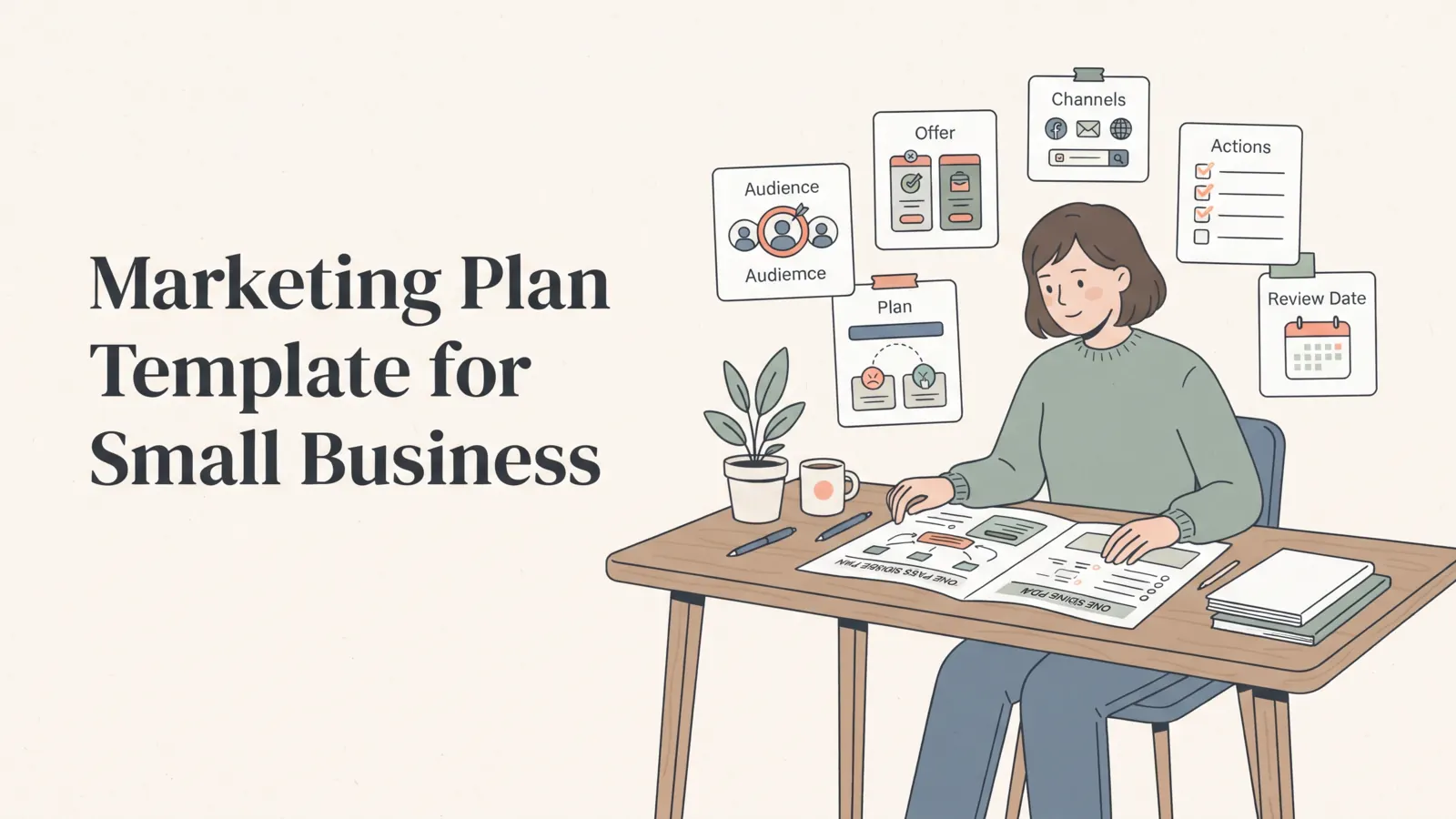
A marketing plan template for a small business should turn a goal into a short list of actions you can keep doing. For a solo service business, that means naming the buyer, the offer, the channels that fit, what you will do in each channel, and how you will review the response.
Start with a one-page plan. Use it to focus on a few ways likely clients can find and understand your service. The sections below give you a fill-in structure, a channel choice table, and a clearly fictional example for a solo designer.
What should a small-business marketing plan decide?
A small-business marketing plan is a written set of choices about whom you serve, what you offer, how buyers can find you, and how you will review the response. The U.S. Small Business Administration's marketing guide describes a marketing plan as the actions a business will take to persuade potential customers to buy, and recommends adapting its sections to what works for the business. Its business planning guide treats marketing and sales as part of the larger plan for attracting and keeping customers. Use those sections as prompts, then make the page fit your own business.
| Plan decision | Write this down | Example for a solo service business |
|---|---|---|
| Audience | Who has the problem you solve? | Independent consultants who need a clearer service website |
| Offer | What service and result are you proposing? | A fixed-scope website review |
| Goal | What change do you want to see, by when? | More qualified inquiries this month |
| Channel | Where can this buyer find or evaluate you? | Referrals and useful search content |
| Action | What will you do repeatedly? | Ask a past client for a specific introduction; publish one answer to a buyer question |
| Signal | What evidence will you record? | Relevant inquiries and booked calls |
The example is a planning model, not a promise that these channels or outcomes will work for every business. Use the rows as prompts, then replace them with your own audience and offer. If you are still shaping the business itself, start with this freelance business plan guide before choosing promotional activity.
How do you fill in a one-person marketing plan?
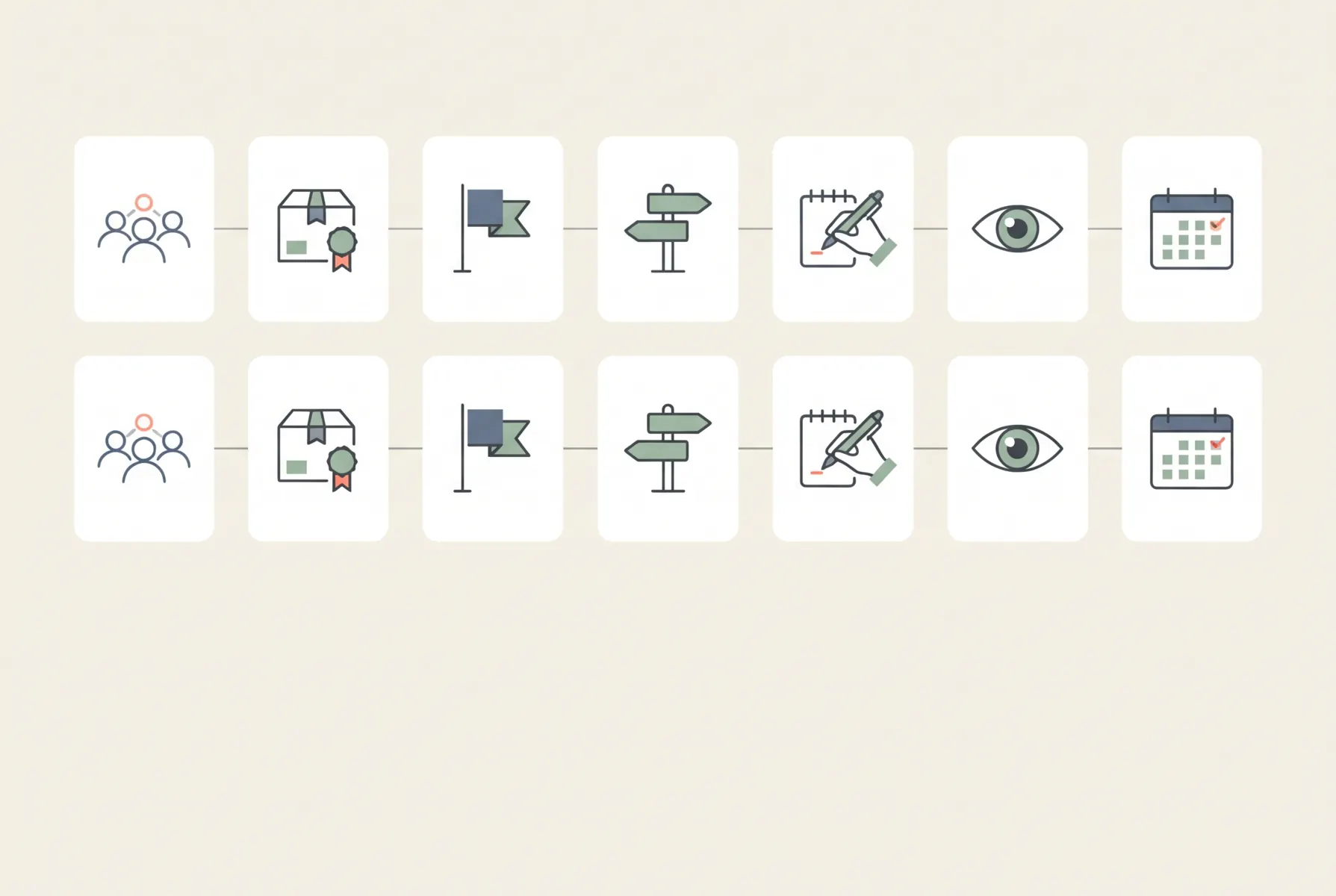
Fill in six linked fields: audience, offer, goal, channel, action, and signal. Add an owner and review date if someone else shares the work. The SBA's marketing guidance also calls out target market, competitive advantage, sales, and budget; a solo plan can capture those ideas without copying a large-company document.
1. Describe one audience you can recognize
Avoid writing “everyone who needs design.” Name a group you can reach and the situation that makes them look for help. For example: independent consultants with a new offer and a website that still describes their old work.
Use what you know, and mark guesses as guesses. If the audience is not clear yet, list the questions you need to answer through conversations, search research, or client feedback. Do not turn a broad market statistic into proof that a particular group will buy from you.
2. State the offer in buyer language
Describe the service, the problem it addresses, and its boundaries. “A two-page website review that identifies unclear service and contact information” gives a buyer more to assess than “design support.” Only promise a result you can control.
You can also write one reason a buyer might choose you and one reason they might hesitate. That competitive advantage may be your specialization, process, format, or availability. Keep it factual and specific to your work.
3. Choose a goal with a time window
Choose an outcome you can observe, then give it a period for review. “Get more clients” is hard to evaluate. “Receive three relevant inquiries in the next month” is specific, though the number is only an example and should be replaced with a realistic target based on your own starting point.
Separate the result from the activity. Inquiries are a result; sending a referral note is an action. You control the action more than the result, so record both. That helps you learn without treating a quiet week as proof that the whole channel has failed.
4. Select channels that fit the buyer and your week
Check how your likely buyer searches, compares, and asks for help. Pick the channels you have time to maintain.
| Channel | Consider it when | A small first action | A signal to record |
|---|---|---|---|
| Referrals | Past clients or peers know the kind of work you want | Send a useful, personal update with a clear description of your offer | Introductions and relevant conversations |
| Search content | Buyers ask questions you can answer with useful expertise | Publish one focused answer to a recurring buyer question | Relevant visits and inquiries mentioning the page |
| People have chosen to hear from you and you can send something useful | Send a short note with one insight and one next step | Replies, clicks, or inquiries, depending on the goal | |
| Social media | Your buyers use a specific platform and your work can be shown there | Share one example or explanation that helps a buyer judge fit | Qualified replies or profile-to-inquiry paths |
| Partnerships | Adjacent professionals serve the same audience without selling the same service | Identify one complementary provider and suggest a useful joint resource | Introductions or shared inquiries |
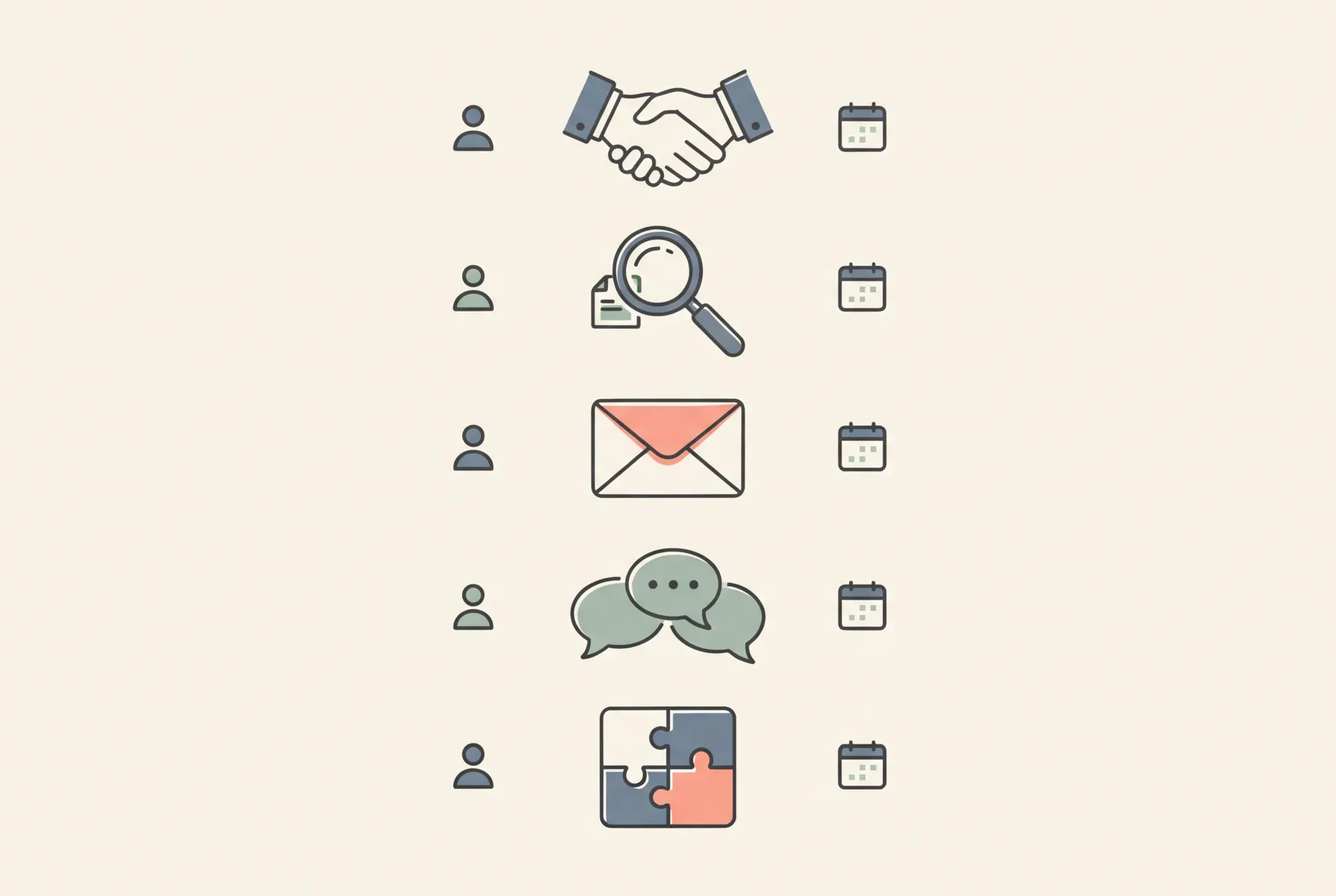
These are starting points, not channel benchmarks. Follow the platform's rules and respect consent for email and direct outreach. If you are unsure where to begin, choose the option closest to how your current clients found you, then test a second only when you can maintain it.
5. Give each channel a repeatable action
Write actions as verbs and make them small enough to schedule. “Grow social” is not an action. “Share one before-and-after explanation on Tuesday” is clearer, as long as you have permission to use the example and it reflects real work.
Record who will do the work, how often, and what must be ready first. A referral action may need a short service description. A useful article may need a buyer question and a source. A partnership idea may need a clear reason the other provider's audience would benefit.
Keep a separate note for assumptions. If you think prospects search for a phrase, label it as a hypothesis until you confirm it. The same applies to conversion expectations and budget estimates. This makes the plan easier to update when actual responses differ from what you expected.
6. Match the signal to the goal
Choose signals that help you decide what to do next. If your goal is qualified inquiries, raw impressions alone do not answer whether the right people are responding. If your goal is awareness, a sale may be too distant to judge a single week's work.
Track a simple path where you can: people reached or visits, relevant inquiries, qualified conversations, proposals, and sales. Not every business can connect every step to a channel with confidence. Note the source when a prospect tells you, and label the rest as unknown instead of inventing attribution.
How can you turn the plan into a four-week test?
Use a short test to learn whether the audience, message, and channel are worth more effort. The following is a fictional example for a solo designer. Its numbers are made up to show how to organize a plan, not to predict a result.
| Week | Action | What the example owner records |
|---|---|---|
| 1 | Write a one-sentence description of a fixed-scope website review; ask two former clients what wording is clear | Questions, unclear phrases, and whether the offer fits |
| 2 | Send a personal update to three professional contacts who may know the audience | Replies and any relevant introductions |
| 3 | Publish one article answering a question raised in the conversations | Page visits and inquiries that mention it |
| 4 | Review the notes and choose one action to repeat or revise | Which audience responded, what they asked, and what remains uncertain |
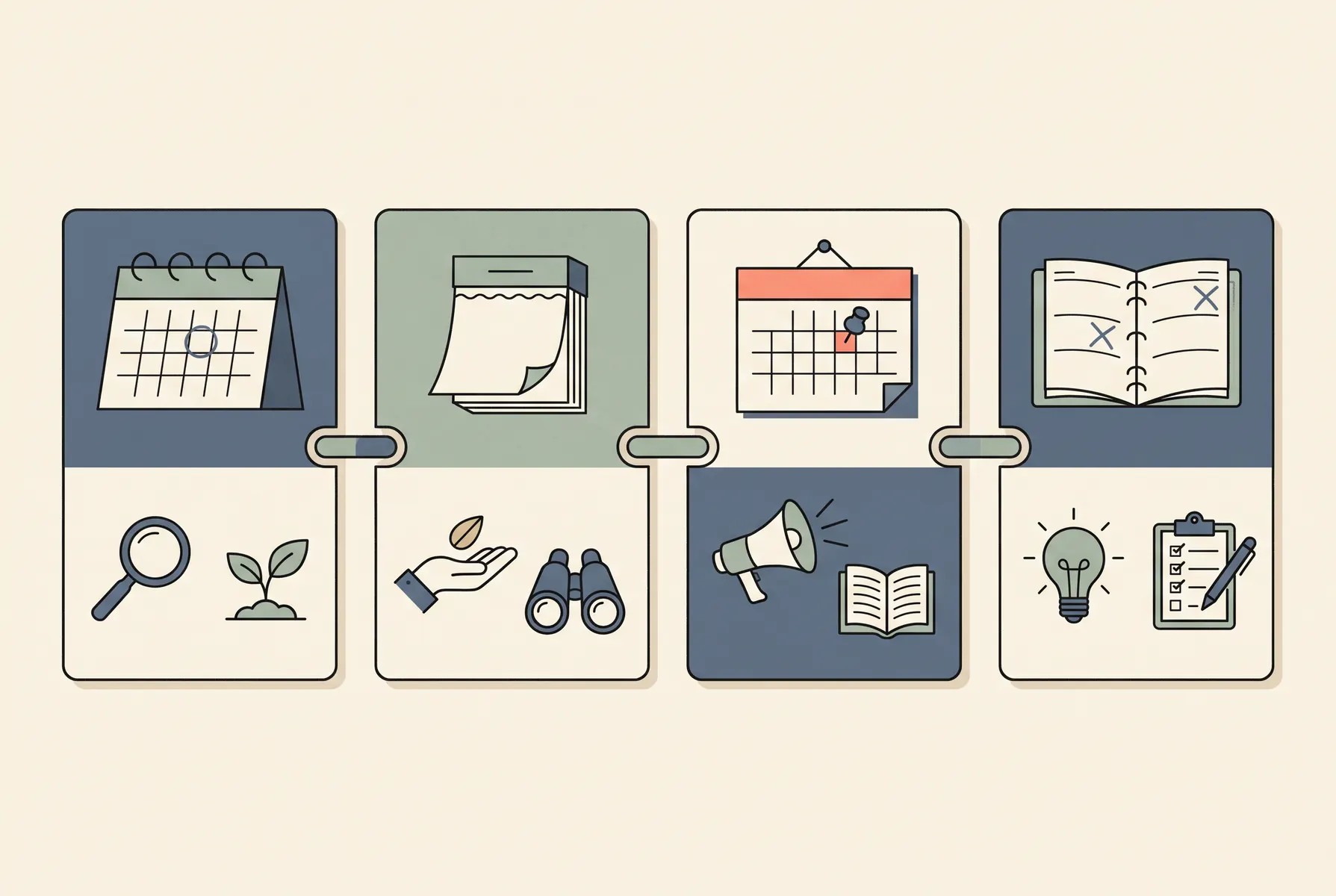
The counts above describe activities in a fictional plan and do not predict conversion results. One inquiry is useful to record, but it does not establish that the channel is repeatable. Keep the original goal visible, record what happened, and decide whether the next test should change the message, audience, channel, or offer.
Avoid changing everything at once. If you change the audience, offer, and channel together, it is harder to tell what you learned. Small businesses often have limited time and incomplete data; a practical plan makes those limits visible instead of pretending every result is attributable.
How should you review a small-business marketing plan?
Review actions often enough to keep them from slipping, and review outcomes at a pace that matches your sales cycle. A short weekly check can ask whether the planned work happened. A monthly review can look at the response and decide what to continue, change, or stop.
Use the same few questions each time:
- Did I complete the actions I planned?
- Who responded, and were they part of the audience I intended to reach?
- What did prospects ask or misunderstand?
- Which signal moved, stayed flat, or could not be measured?
- What is one change to test next?
Do not overreact to one inquiry or a quiet week. Preserve the notes behind your decision so you can compare several review periods. If a channel takes longer to produce a sale, look for nearer signals such as relevant conversations, while keeping the final business goal in view.
What makes a marketing plan usable for one person?
A plan is easier to use when it limits active channels, names the next action, and gives that action a review date. Keep research, assumptions, and results together so you can tell a real observation from a guess. A plan that needs constant upkeep may become another abandoned document.
Start with the information you already have: where current clients came from, what they asked before buying, which service is easiest to explain, and how much time you can set aside. When an answer is uncertain, turn it into a test. Leave unsupported targets off the page.
For a broader planning cycle, use this small business goals guide and the quarterly goals template guide to connect channel work with the next review period. Keep the marketing page focused on audience, offer, and ways to reach buyers. If you want the business goals and channel plan in one workspace, the Notion Business Planner planning pages provide a place to organize both.

Why Trust This Article
This guide adapts the U.S. Small Business Administration's public guidance on marketing and business planning, checked on November 9, 2026, into a one-person worksheet. Notion Business Planner by Cosmo Suite prepared the worksheet. The designer example is fictional, and its activity counts illustrate planning only; they are not customer results or a tested campaign. No channel or schedule is presented as a guaranteed result. Adapt the plan to your service, audience, and available time.
Where Notion Business Planner Fits
Notion Business Planner includes a Marketing & Social Strategy page alongside Business Plan & Goals, Brand & Services, Client Pipeline, projects, finances, and daily, weekly, and monthly planning. Those sections can keep business decisions and marketing actions in one Notion workspace. See the Notion Business Planner workspace if you want a ready-made place to organize those parts.
The template helps you plan and track information. It does not schedule posts, run campaigns, provide marketing analytics, or guarantee leads. You can start with a single channel and add detail as you learn what your buyers respond to. If you also need a place for wider business planning, the Notion Business Planner dashboard includes the listed planning pages in one linked template.
Frequently asked questions
What should a small business marketing plan include?
Include a specific audience, offer, goal, selected channels, repeatable actions, a way to track responses, and a review date. A solo service business can keep this to one page and add detail only when a decision needs it.
Can I use a free marketing plan template?
Yes. A document or spreadsheet can hold the plan. Choose a format you will review, then make sure it connects each channel to an action, an owner, and a signal you can observe.
How many marketing channels should a small business use?
There is no universal number. Start with the channels you can maintain and that fit how your likely buyers look for help. One or two well-run tests are easier to learn from than a long list of inactive accounts.
What should I measure in a marketing plan?
Track a small set of signals tied to your goal, such as relevant inquiries, qualified conversations, proposals, and sales. Add channel-specific activity counts only when they help explain what happened.
How long does it take to make a marketing plan?
It depends on what you already know about your audience and offer. You can draft a first version quickly, but research and testing take longer. Mark assumptions clearly and set a date to revisit them.
How often should a small business review its marketing plan?
Set a regular review that matches your sales cycle and workload. A short weekly check can keep actions moving, while a monthly review can compare the signals with your goal and decide what to continue, change, or stop.
Sources
Keep reading
Plan the Business
Freelance Business Plan: A One-Page Plan You Can Fill In Today
Freelance business plan in one page: six sections to fill in, a worked example for a solo designer, and a quarterly review so the plan stays alive.
· 8 min read

Plan the Business
Small Business Goals: Three You Can Track Each Month
Choose three small business goals for delivery, demand, and money, then track each with a baseline, target, next action, and monthly review.
· 8 min read

Plan the Business
Quarterly Goals Template for a One-Person Business
Quarterly goals template: set three goals, record a baseline, schedule monthly reviews, and track progress in your one-person business each quarter.
· 8 min read
