How Much to Save for Taxes Self Employed: Find Your Own Rate
how much to save for taxes self employed: use your own federal estimate to set a tracking rate, then update it as your business income changes.
By Notion Business Planner by Cosmo Suite · Editorial policy
Published · 8 min read
If you work for yourself in the United States, no single tax percentage fits every business owner. Your federal estimate depends on expected income, deductions, filing details, credits, and any withholding from other work. A familiar percentage from a friend or forum can miss those differences.
Start with the IRS's current Form 1040-ES worksheet or Publication 505 to estimate your own federal tax. Divide that estimate by expected net business profit to create a bookkeeping rate. It helps track cash. It does not replace the IRS calculation or tell you by itself when a payment is due.
This guide covers US federal tax tracking for an individual with self-employment income. State and local rules can add separate obligations. If you are trying to keep client work, unpaid invoices, hours, and a tax reserve visible, a business planner with a tax set-aside view can keep those records together without calculating your tax.
Key takeaways:
- Use a current personal estimate, not a generic percentage.
- Match the estimate to the income figure used in its calculation.
- Track money reserved separately from estimated tax payments made.
- Recheck the estimate when income, expenses, withholding, or circumstances change.
Your Tax Set-Aside Rate Depends on Your Own Estimate
Your estimate and the income base you choose determine the amount to set aside. Two people with the same client revenue may have different estimates because their expenses, other income, filing details, withholding, and credits differ.
A tax set-aside rate is a bookkeeping percentage applied to an income amount to track cash for a later tax bill. Estimated tax is the federal payment method for income without withholding. It can include income tax and self-employment tax. The IRS uses “self-employment tax” for Social Security and Medicare taxes on self-employment income. A reserve based on one part alone can leave out the rest of the estimate.
For 2026, Publication 505 includes a worksheet for estimated tax and a section for estimating self-employment tax. The IRS Self-Employed Individuals Tax Center points readers to Form 1040-ES and says to refigure an estimate if expected earnings change. Use these as starting points for your own current estimate. Read the IRS's 2026 Publication 505 and the IRS self-employed tax guidance, checked November 8, 2026.
A Personal Set-Aside Rate at a Glance
A useful tracking rate connects an estimated tax amount with a matching income base, then gives you a date to review it. This table shows the calculation structure. It is not a suggested tax rate.
| Step | Use | Example or check |
|---|---|---|
| Current estimate | Your annual federal estimate | From the current IRS worksheet or qualified advice |
| Income base | Expected net business profit used in that estimate | Keep receipts and expenses available |
| Tracking rate | Estimate ÷ income base × 100 | Fictional: $12,000 ÷ $60,000 = 20% |
| Review point | A date or change that prompts a new estimate | New quarter, major income change, or updated withholding |
The example's 20% is arithmetic applied to fictional inputs. It is not a recommendation, typical rate, or estimate for your household. Calculate a separate amount for state or local tax if those rules apply.
Find a Current Estimate Before Choosing a Percentage
Start with the IRS materials for the tax year you are estimating. Form 1040-ES includes a worksheet for individuals. The IRS page about Form 1040-ES describes when the form is used. The IRS estimated taxes page explains the process for people who work for themselves. Publication 505 explains estimated tax and withholding, including self-employment income. The IRS notes that self-employed people generally use estimated tax to pay income tax and Social Security and Medicare taxes because an employer is not withholding those amounts.
Gather the inputs the worksheet asks for. These may include expected income, business profit, deductions, credits, filing status, and withholding. If you also have wages or a spouse's income on a joint return, your estimate may need to account for those details. Use the current-year instructions or ask a tax professional if the calculation is unclear.
The IRS's general estimated-tax rule looks at whether you expect to owe at least $1,000 after withholding and credits, and whether withholding and credits are below a threshold tied to current or prior-year tax. Exceptions apply, including for some higher-income taxpayers and people with farming or fishing income. Check Publication 505's current rules before deciding whether you must pay.
If your income is uneven, a single annual estimate can be harder to map to installment periods. Publication 505 includes an annualized income method for some cases. Its worksheet explains when that method may apply. A tax professional can help if your income pattern or circumstances make the standard worksheet unclear.
Turn the Estimate Into a Tracking Percentage
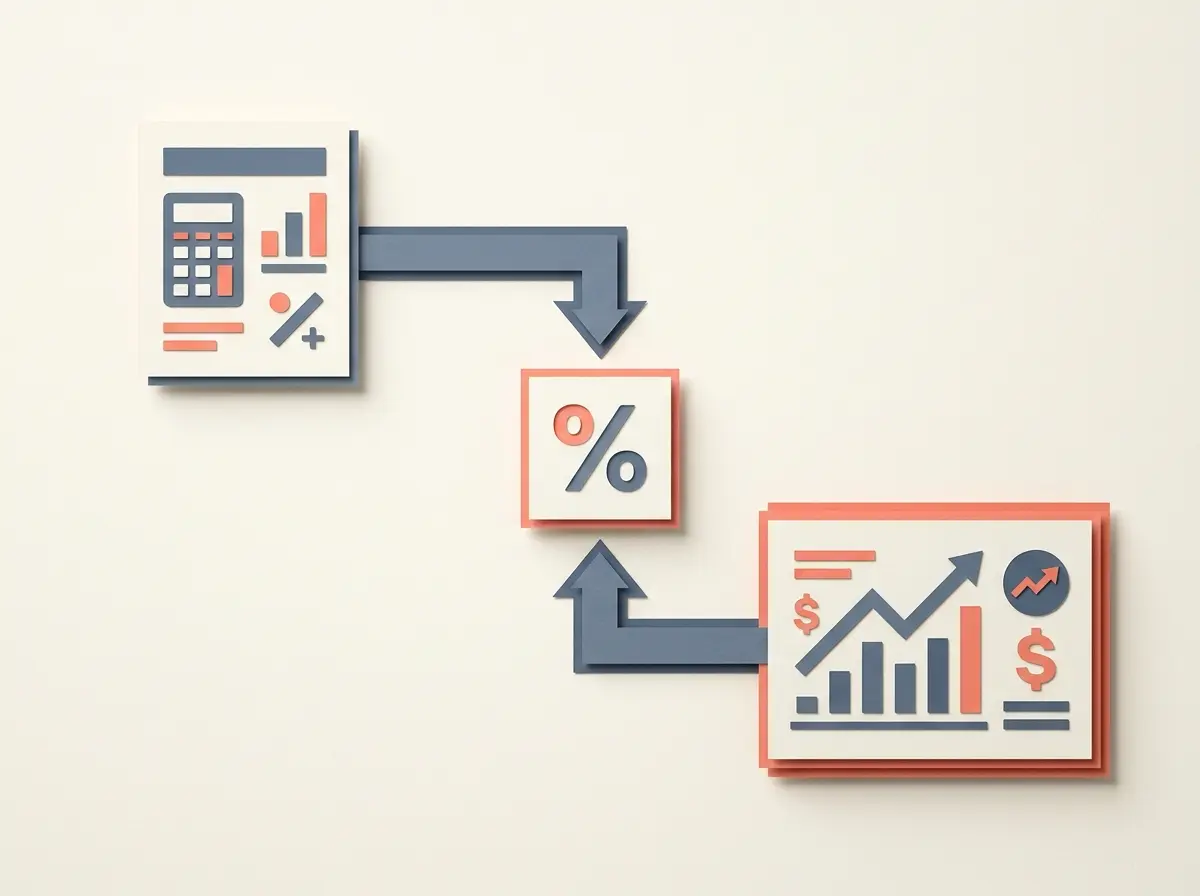
Once you have an annual tax estimate and a matching annual net-profit estimate, divide the first by the second. Multiply by 100 to express the result as a percentage. This gives you a way to apply the estimate consistently to new profit entries and see whether your reserve is keeping pace.
Here is a fictional example. A solo designer estimates $60,000 in net business profit for the year and gets a $12,000 federal tax estimate using current guidance for their situation. The calculation is $12,000 divided by $60,000, or 0.20. As a tracking rate, that is 20%.
If the designer records $5,000 in net profit for a month, applying the tracking rate would add $1,000 to a reserve ledger. This is a bookkeeping illustration. It does not mean the designer's tax is exactly $1,000 for that month or confirm a payment amount or due date.
Net business profit means business income after the costs you deduct in your estimate. Keep the calculation’s inputs visible. If you use gross receipts instead, the rate has a different meaning. Do not switch between gross and net figures without updating the label. Otherwise a reserve can look larger or smaller than it is.
A worked example of effective hourly rate can help you review fee income alongside project hours..
Keep the Reserve Separate From Tax Payments
A tax reserve is money you have set aside. An estimated tax payment is money sent to the IRS or another tax agency. Track them separately so a transfer to savings does not look like a payment, and a payment does not disappear from the reserve history.
A simple ledger can record the date, source income, income base, rate used, amount reserved, payment date, amount paid, and remaining balance. If a payment covers federal estimates only, do not imply it covers state obligations too.
Estimated tax is generally paid during the year in installments when the rules require it. The IRS says that if you determine estimated payments are needed, you can make quarterly payments or pay the full required amount by the first quarterly due date. Payment calendars can change, so confirm dates for the tax year on IRS.gov.
After a payment, subtract it from the reserve balance you are tracking for that obligation. Keep the confirmation with your other tax records. If you move money into a dedicated savings account, record the transfer as a reserve movement rather than an expense or tax payment.
A monthly business review template for a solo owner can help you check collected income, unpaid invoices, hours, and the next review date. Keep the tax estimate in a labelled field with its source and the date you last checked it.
What Can Change Your Tracking Rate
Update your estimate when the inputs change. A new client, fewer projects, higher expenses, a second source of wages, a large deduction, or a change to withholding can affect the current worksheet. The right adjustment depends on your full tax picture.
Review your figures at a set interval, such as when you prepare an estimated payment or update your books. Use the same income definition each time, and note why the rate changed. A short history helps explain whether a reserve balance reflects a new estimate or a different month of income. If receipts arrive unevenly, compare year-to-date profit with the estimate you are using. Write down whether you changed the rate because the forecast moved, a payment was made, or withholding changed. Those are different events, even if they happen in the same month.
A monthly check can be brief: update the income total, note any new expense pattern, compare withholding and payments with the current estimate, then set the next review date. Keep the date visible so an old percentage does not quietly become a permanent rule. When the result affects a payment decision, use the current IRS instructions or professional advice.
State and local tax is separate from the federal estimate here. Check your state or local tax agency to see whether it requires estimated payments and which worksheet applies. Do not add a state percentage to a federal tracking rate unless you have calculated both amounts for your circumstances.
If a tax result could affect a payment, penalty, or filing obligation, check the official instructions or ask a qualified tax professional. A reserve tracker organizes the numbers you choose to record. It cannot tell you what the law requires.
Why Trust This Article
Notion Business Planner by Cosmo Suite publishes planning content for solo service businesses. We checked IRS Publication 505 (2026) and the IRS Self-Employed Individuals Tax Center on November 8, 2026. This article explains a record-keeping method and does not provide tax advice. Read about us and our editorial policy. Contact our team with a correction. Verify current federal and state guidance before acting.
Where Notion Business Planner Fits In
Notion Business Planner includes a finances area with invoices, a who-owes-me view, and a tax set-aside, alongside a dashboard and business planning pages. Those contents can help you keep an estimate, reserve entries, and payment notes together. The planner does not calculate tax, determine a required payment, or replace official forms or tax advice.
You could label a field with the estimate source and checked date, then use a separate entry for each reserve transfer and tax payment. Keep original receipts and source documents in the record system you use for them. A clear split between estimate, reserve, and payment makes the running balance easier to interpret.
If you use Notion to organize client work, the Notion business planner's finance and tax set-aside pages can keep that tracking beside invoices and business plans. Choose labels that match your method and revise them when your estimate changes.
Frequently asked questions
How much should I save for taxes if I am self-employed?
There is no single percentage that fits every self-employed person. Use the current tax estimate for your own income, filing details, withholding, and credits, then compare it with your expected net business profit to create a tracking rate.
How do I calculate my self-employed tax set-aside percentage?
Divide your current annual tax estimate by your expected net business profit, then multiply by 100. A fictional $12,000 estimate divided by $60,000 of expected net profit gives a 20% tracking rate. Your estimate must reflect your own situation.
Do self-employed people pay estimated taxes quarterly?
Some do. The IRS says estimated payments may be required when both its tax owed and withholding tests apply. Use Form 1040-ES and Publication 505 for the current rules that fit your situation.
Should I save tax money from gross income or profit?
A tracking method can use either base if you define it consistently, but an estimate based on net business profit should not be compared with gross receipts as if they were the same amount. Keep the estimate's income basis clear.
Does a tax set-aside account count as a tax payment?
No. Moving money into a reserve keeps cash available, while a payment to a tax agency reduces an amount you may owe. Record the reserve balance and payments separately.
Can Notion tell me how much tax to pay?
A Notion page can record an estimate, a chosen reserve rate, and payment dates. It does not determine your tax liability. Use current official forms or a qualified tax professional for calculations.
Sources
Keep reading
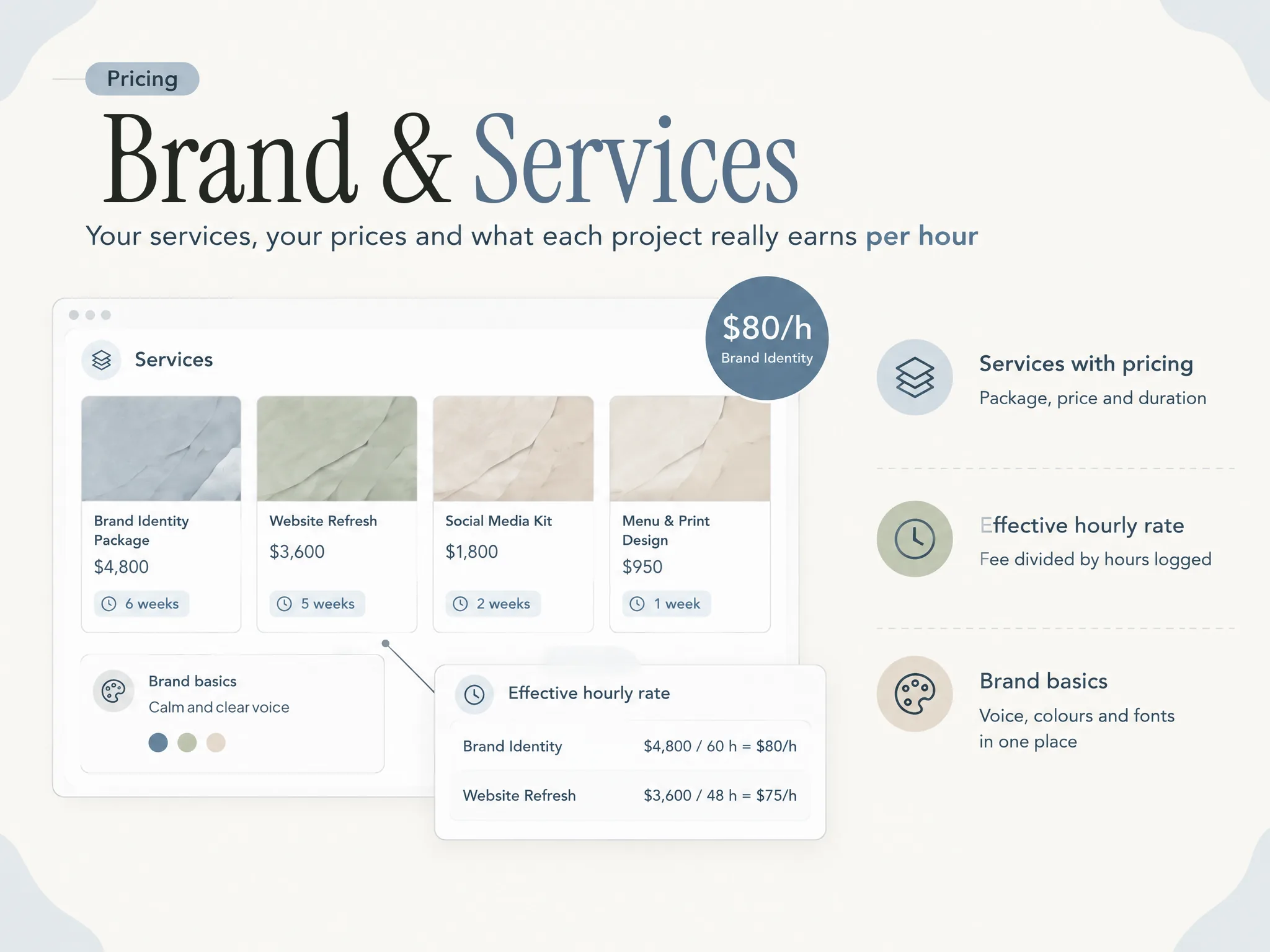
Money and Pricing
Effective Hourly Rate: How to Calculate What a Project Pays
Calculate an effective hourly rate for fixed-fee work with a simple fee ÷ hours formula, three labelled project examples, and a checklist for your next quote.
· 9 min read
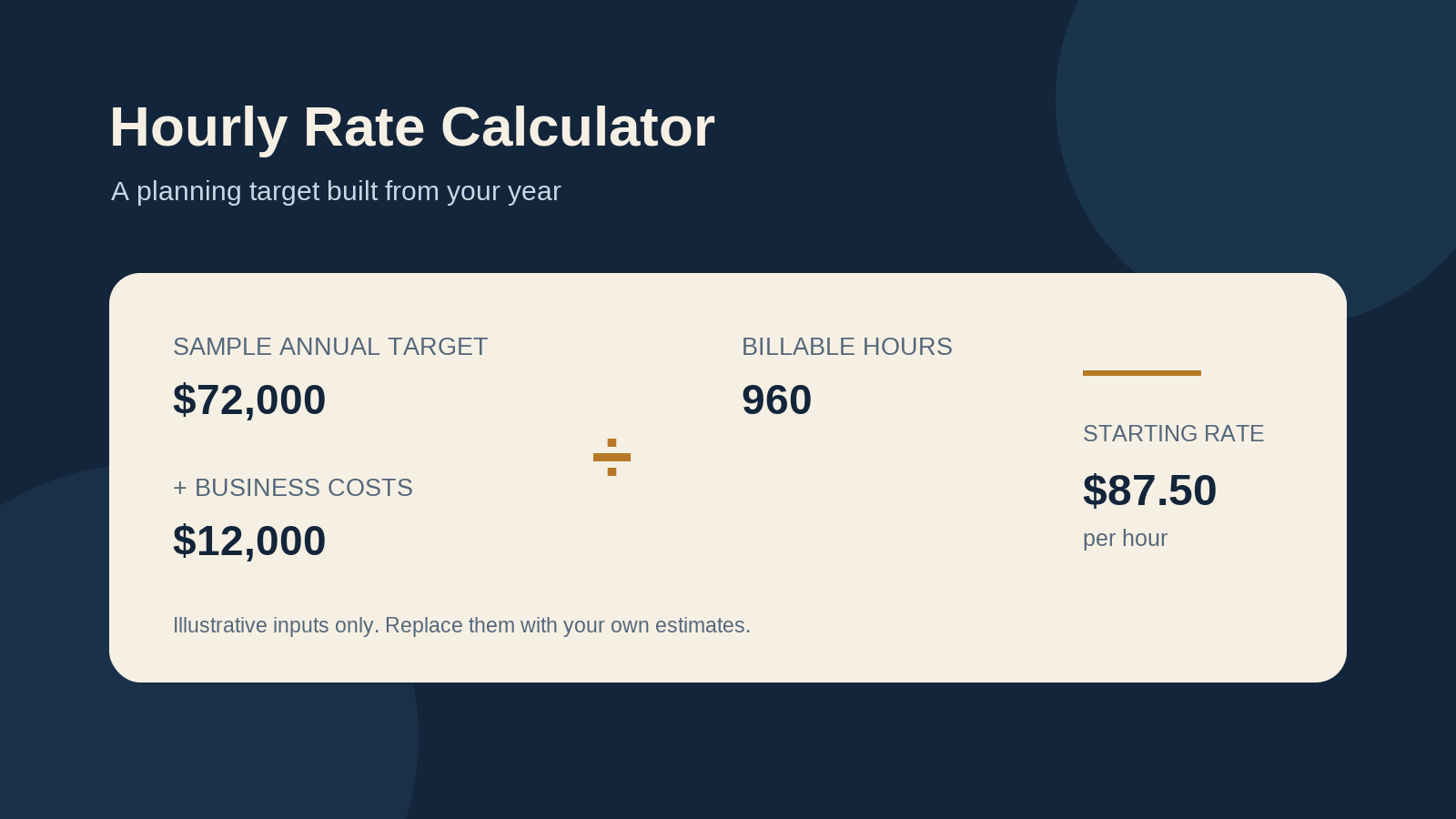
Money and Pricing
Hourly Rate Calculator: Set a Target From Your Workweek
Hourly rate calculator: turn an income target, business costs, and billable hours into a starting rate, then see how your workweek changes the result.
· 8 min read
Money and Pricing
Billable Hours vs Non-Billable Hours: Log Both When You Work Alone
Billable hours are only part of your week. Log billed, absorbed and non-billable time, then see what an hour of work really pays, with a worked example.
· 8 min read
